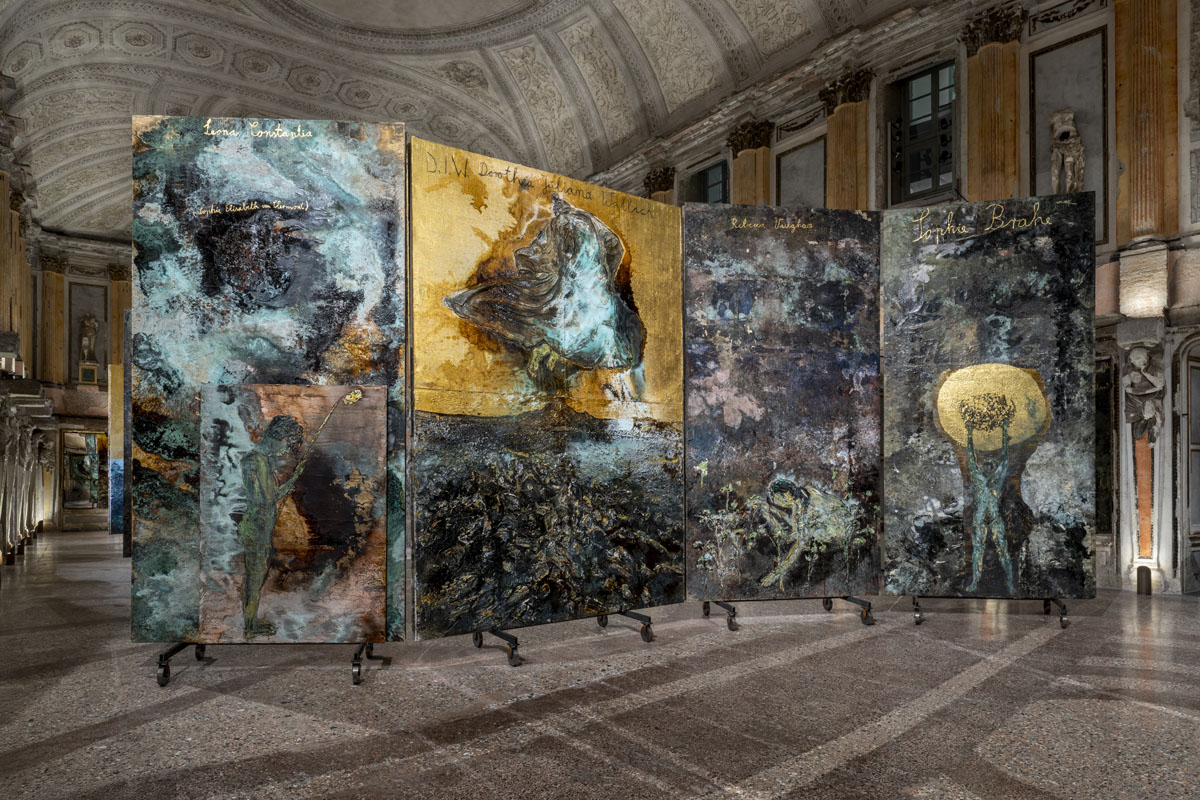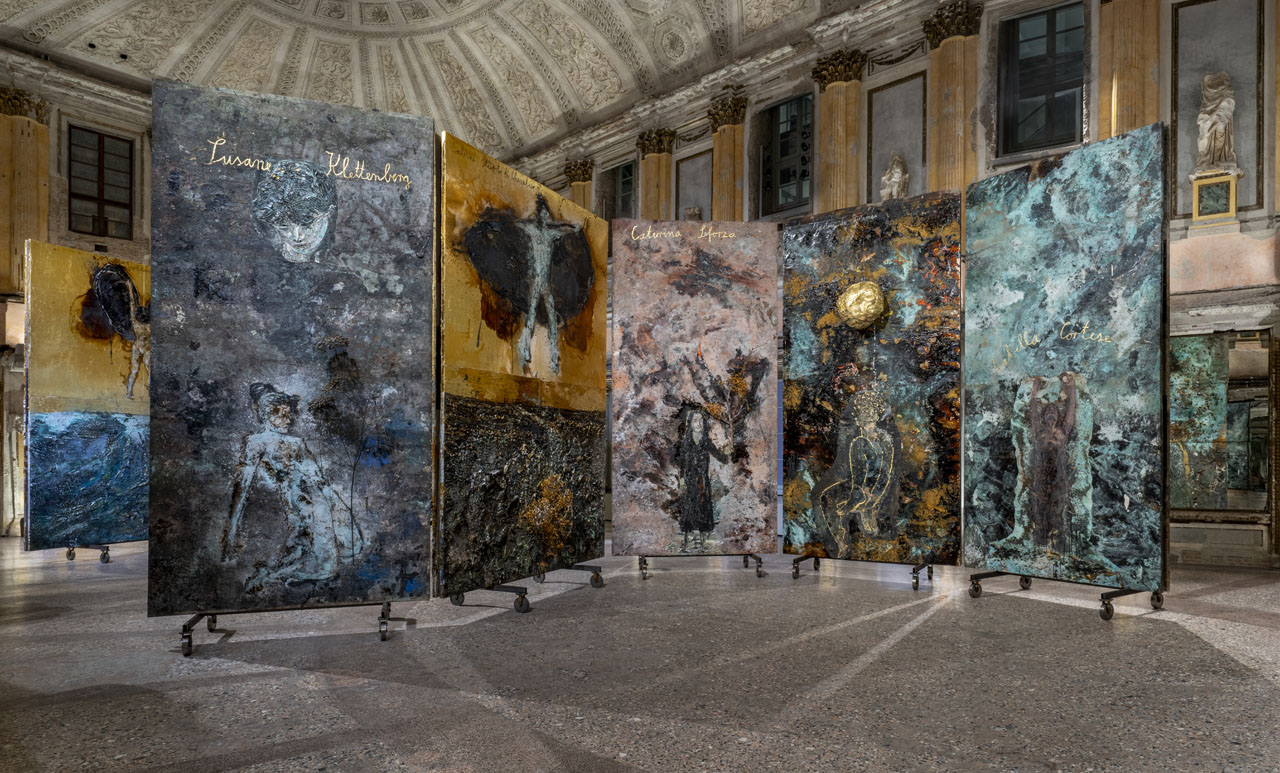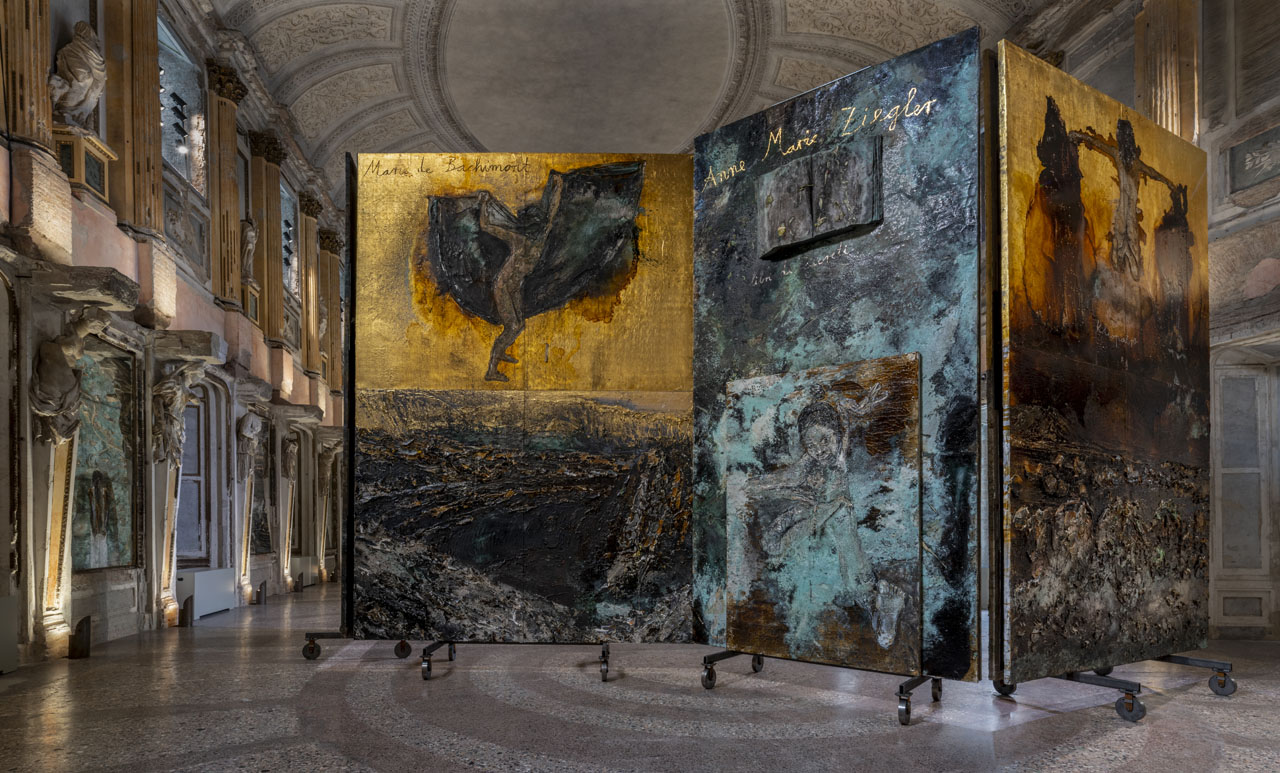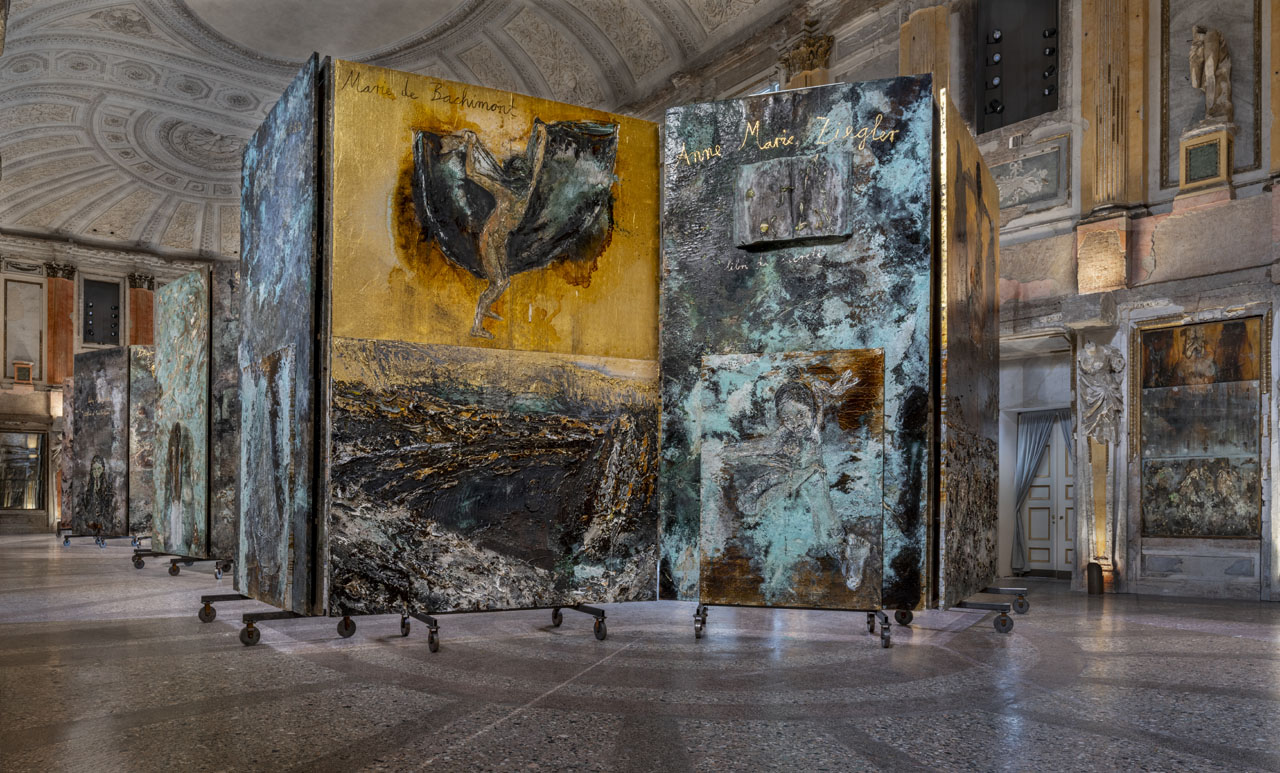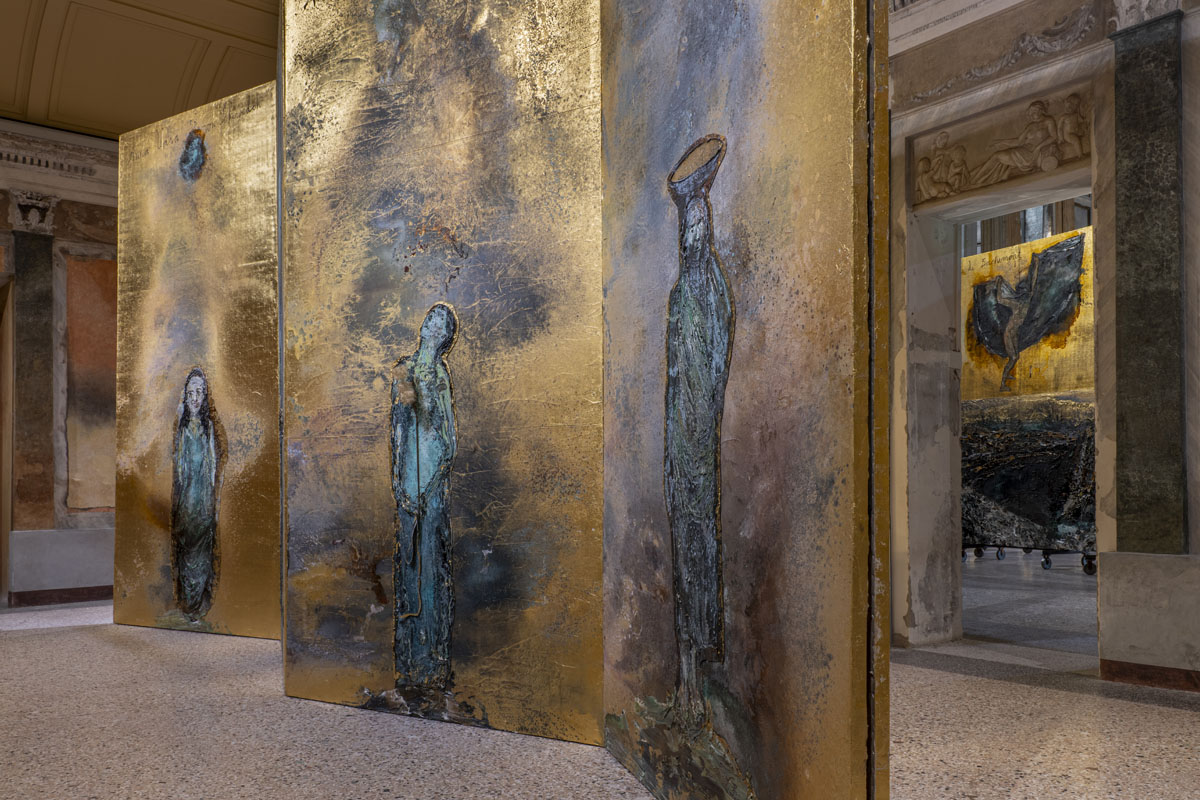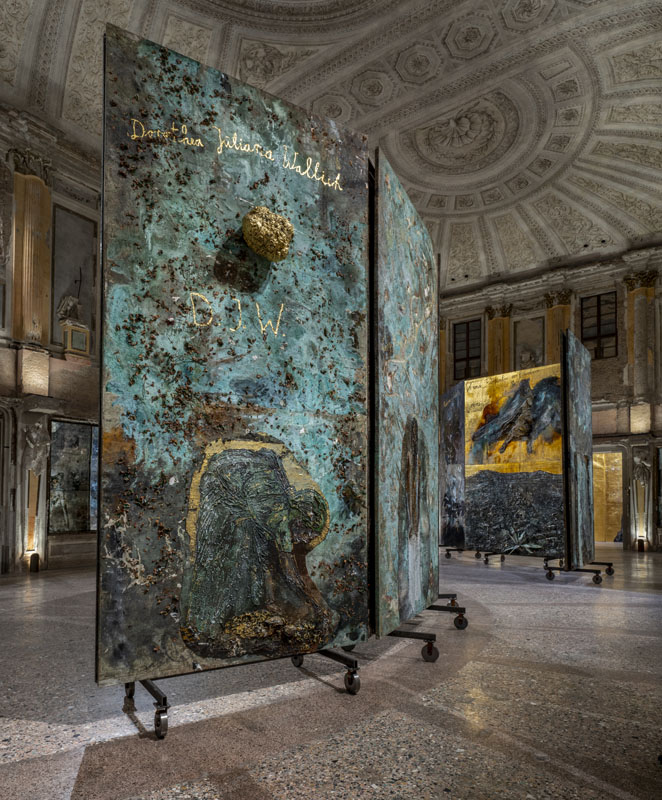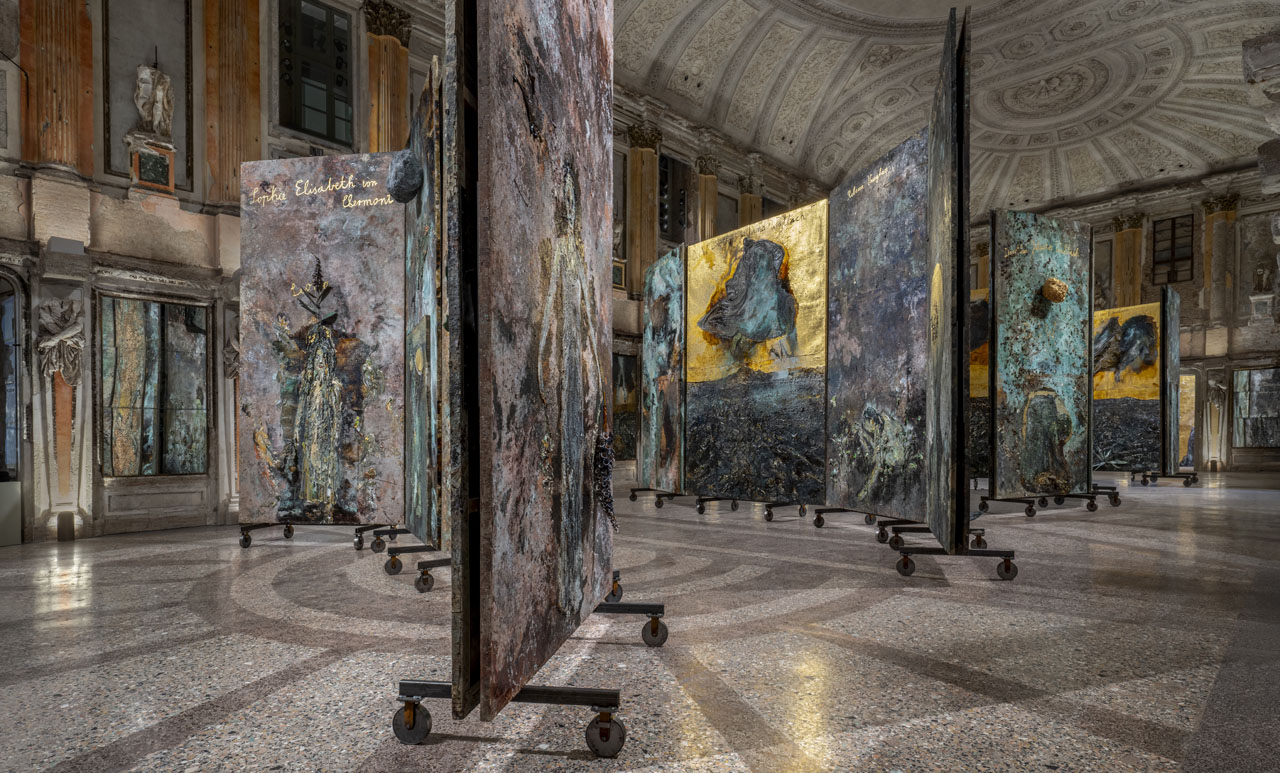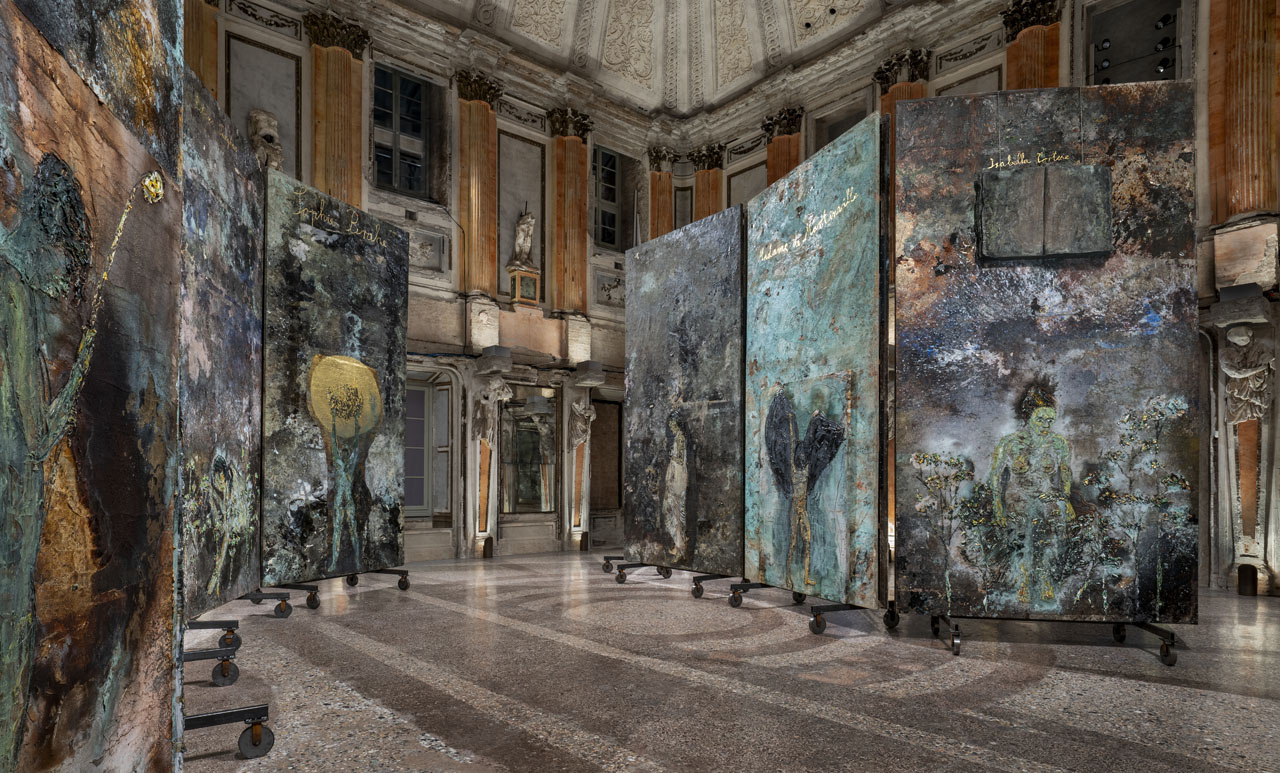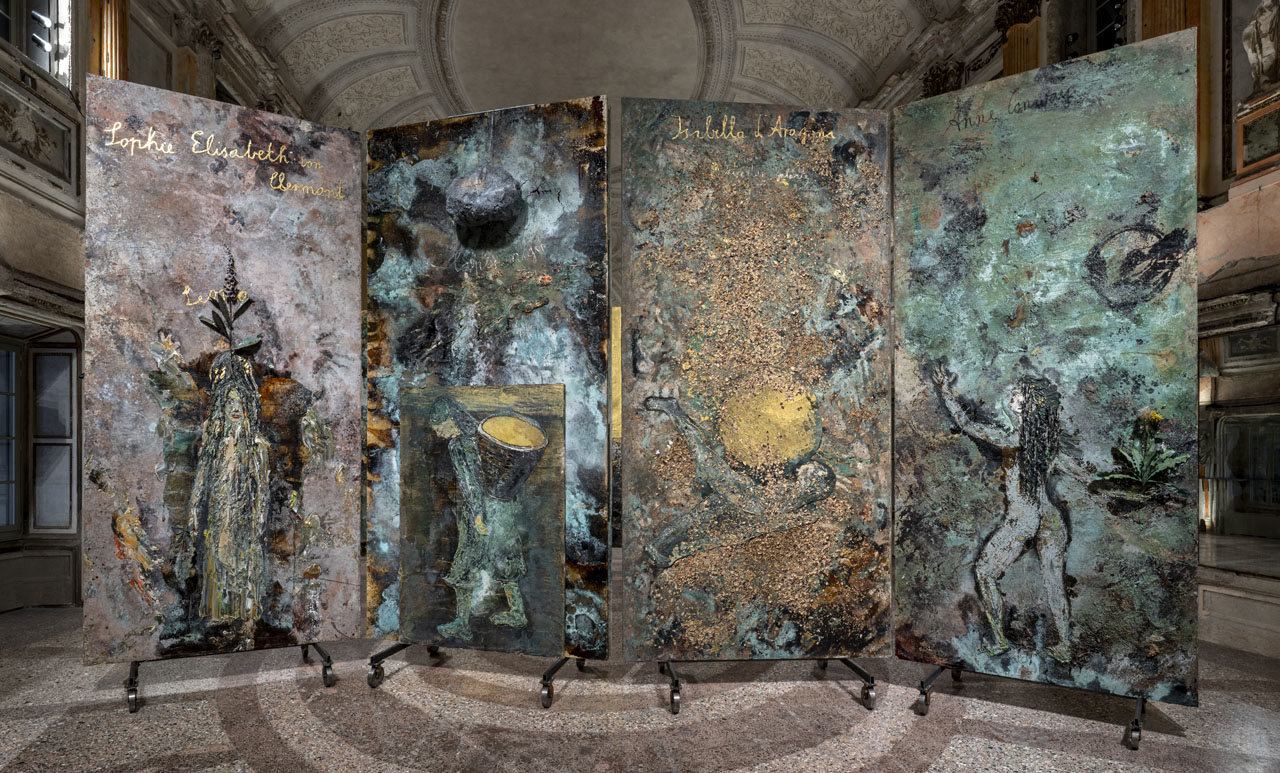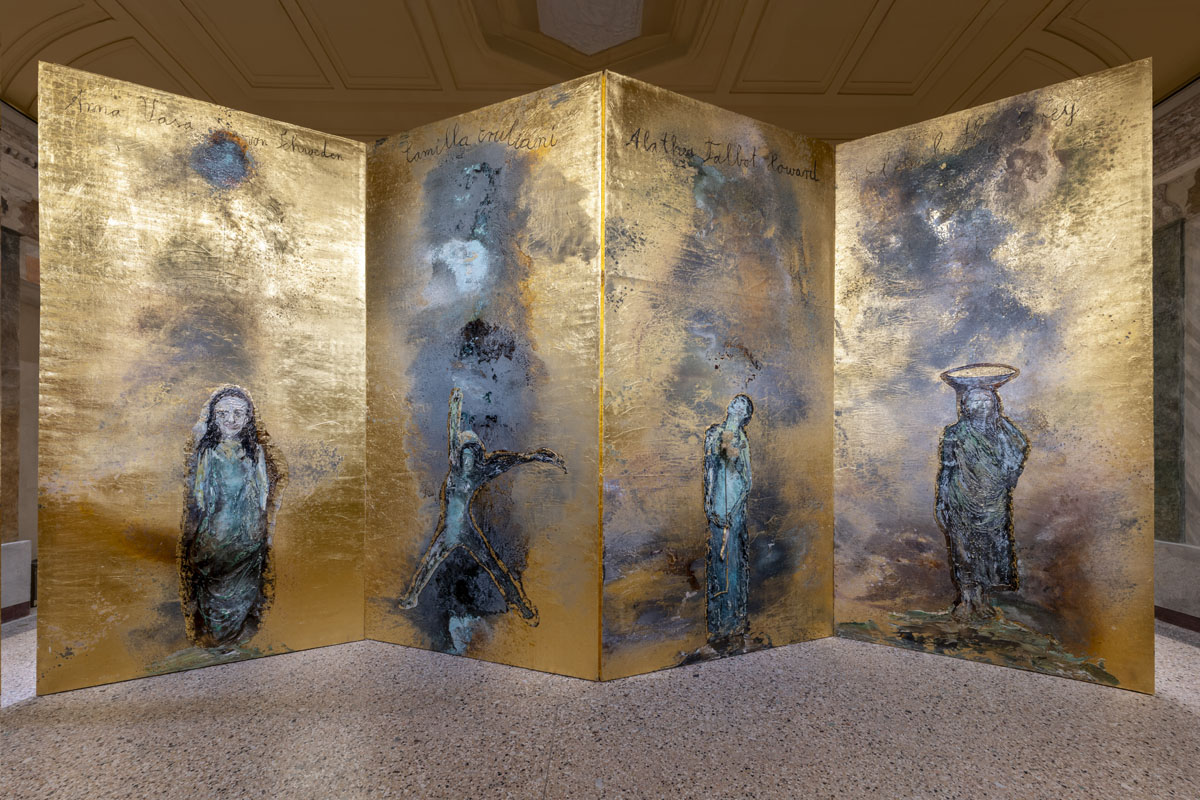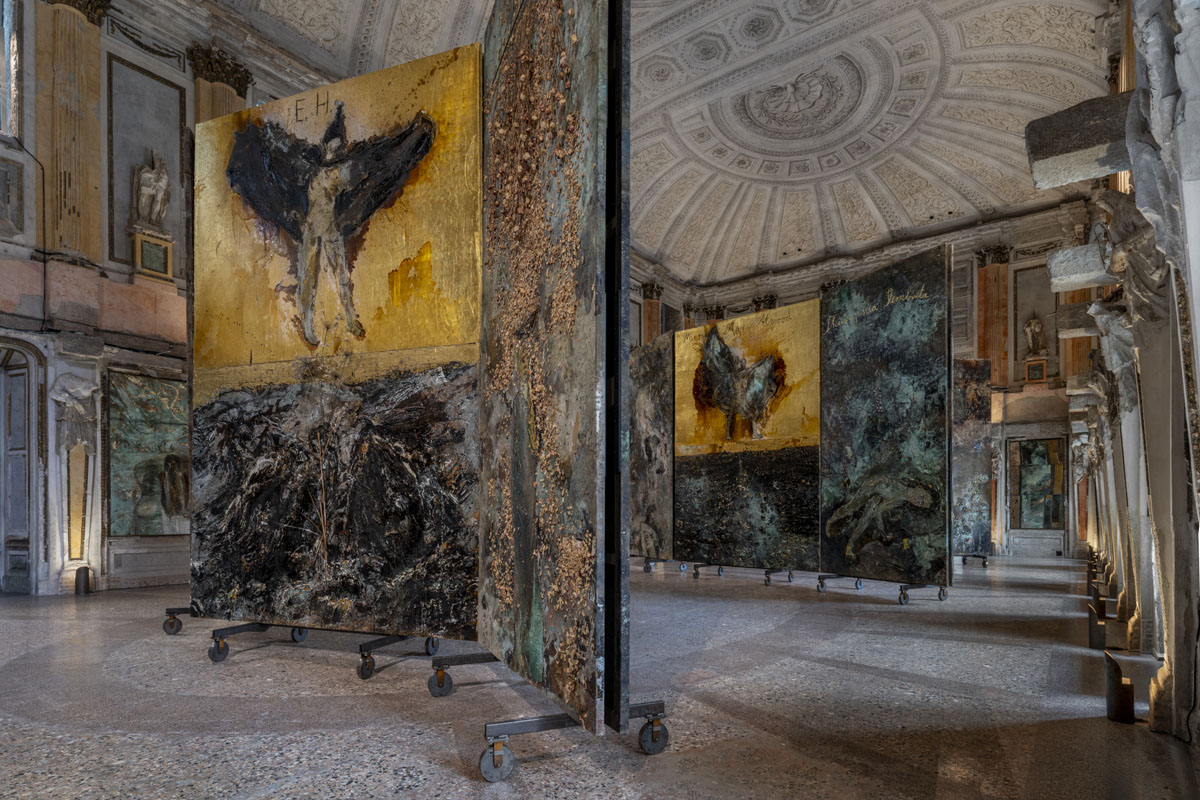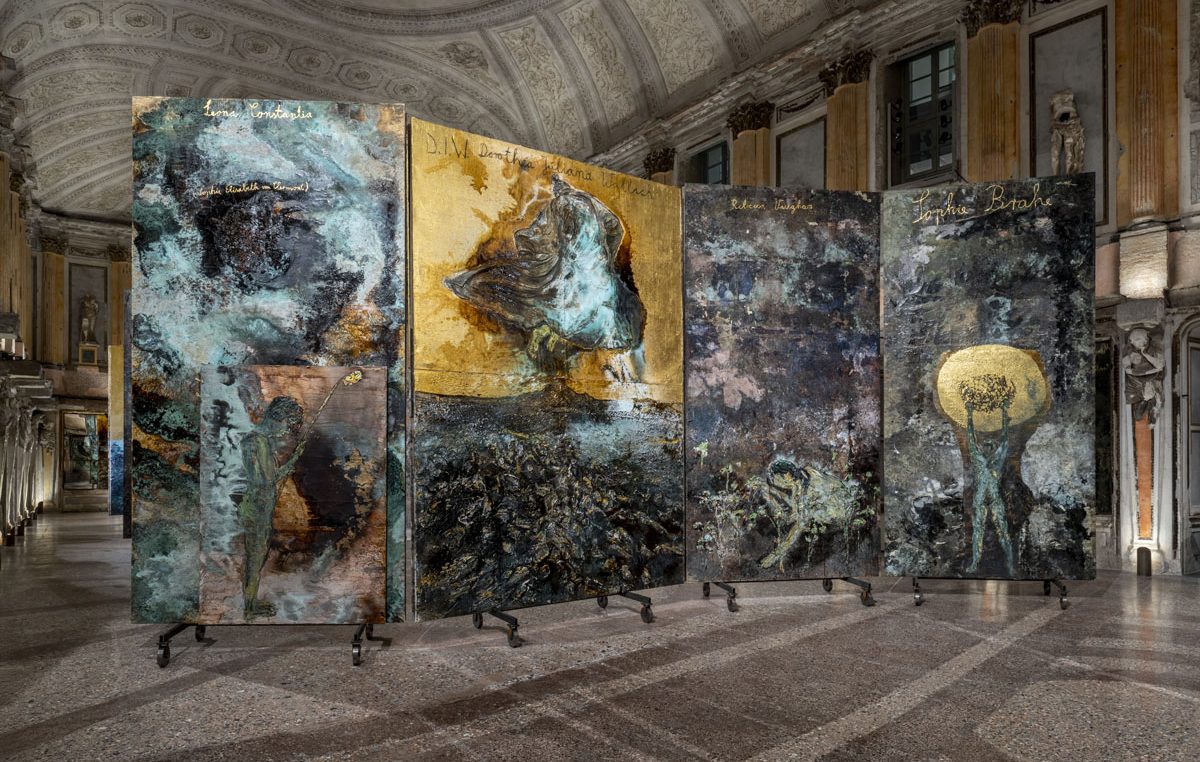
Anselm Kiefer, one of the most authoritative figures in international contemporary art, pays tribute to women alchemists with a new cycle of paintings conceived specifically for Palazzo Reale in Milan. The 38 large-scale canvases, dedicated to those women who, through alchemy, made a fundamental contribution to the birth of modern science, engage in dialogue with the architecture of the Sala delle Cariatidi. It was here that the fire caused by Allied bombing in 1943 severely damaged—almost erasing—the bodies of the 40 sculptures of the women of Caria (the Caryatids) that once supported the room’s surrounding balcony.
The large paintings of The Alchemists, conceived as a single, profoundly symbolic work, intertwine themes central to the artist’s practice: myth, history, collective memory, identity, destruction, and regeneration. Painting becomes an alchemical language: each canvas presents itself as an act of resurrection, with a face emerging, a story unfolding, matter transfiguring. Kiefer thus invites the viewer to immerse themselves in an emotionally powerful, almost initiatory journey.
The exhibition constructs a true female pantheon through a process of historical recovery that reflects on the lives of these women, about whom little or nothing was known until only a few decades ago. Heroines or witches? Angels or demons? Proto-scientists or charlatans? The Alchemists were learned women, endowed with great intuitive intelligence and rigor—visionary and resilient—yet perhaps for this very reason marginalized, persecuted, and at times condemned by the dominant culture.
“Although they began from and practiced the alchemical arts,” curator Gabriella Belli emphasizes in the catalogue essay, “they had the courage to overturn its priorities [that is, to abandon the uncertainties surrounding the search for the Philosopher’s Stone and the opus magnum] and, through their ‘secrets,’ to open more than one door to modern science. The exhibition speaks of these achievements, of this female expertise, and of the resonance of women’s voices when they claim their talents, in a continuous crossing into a broader and even more crucial theme. It is the theme of regeneration, of care, of shedding prejudice, of the union of opposing principles—light and darkness, masculine and feminine, good and evil, life and death—in a descent into the obscurity of the unknown alchemical realm but also in an ascent toward the light of reason and science, to which Kiefer’s painting gives exemplary voice.”